
Neonatal Early Stabilisation Team – optimising perinatal wellbeing package
This 2026 quality improvement project aimed to sustainable improve compliance of temperature data of preterm deliveries
Authors
Dr Kathleen Brown, Neonatal Consultant, NHS Tayside
Dr Lauren Shaw, Neonatal Consultant, NHS Tayside
Background
- As a unit, we aim to optimise preterm perinatal care in line with the evidenced interventions known to optimise outcomes for babies <34 weeks. A trend of poor compliance with documented temperature at 1 hour of age was noted and we were highlighted as being outliers by 2 standard deviations on National Neonatal Audit Programme data.
- Through interrogation of our data, we noted that thermoregulation was generally good, but our documentation let us down and was often submitted late onto our Badger Electronic Patient Record.
- The aim of this project was to improve compliance of our temperature data through a standardised approach to attendance and documentation of preterm deliveries, optimising all areas of intervention in a sustainable way.
- This project sought input from our medical and nursing teams at all levels, to facilitate engagement and enthusiasm for ensuring a full team approach to perinatal optimisation.
Measures
- No new measures were added; we used existing data collection processes to review Temperature on admission within 1 hour of birth.
- We observed our data trends following implementation of the below test of change, to see as close as possible to real time, whether this had been successful, and act on this as needed.
- We had an initial brainstorming session with our multidisciplinary neonatal team, outlining the issue and exploring ideas for improvement. The idea of a team response for preterm deliveries, similar to that of a trauma call was created and called the Neonatal Early Stabilisation Team (NEST). Within this team, there are specific roles for ‘Airway and Cord Management’, ‘Temperature, Timing and Transport’ and ‘Scribe, Badger and Hepma’. We allocated 3 team member roles for this approach, so that even out of hours, this could be facilitated with the team available.
Improvement Plan
- The launch of the new team approach coincided with resident doctor change over, so we were able to implement this with our induction package. There were also nursing education sessions, so that everyone was aware of the proposed changes and reasons for change.
- With any delivery less than 34 weeks gestation, the team assemble and have clip tags with allocated roles, along with a timer for the person in charge of time management. We did a run through and decided that in order to reach our unit, which requires going up one floor in a lift, we had to leave labour suite by 40minutes of age, to be able to comfortably document a temperature on the unit within 1 hour of birth.
- If a theatre delivery is planned, we now always aim to join the pre-theatre briefing to discuss the preterm plan and ensure that parents are up to date as possible with this plan – this is in addition to our usual prenatal counselling.
- The person responsible for ‘Cord and Airway’ (usually middle grade resident doctor/ANNP or Consultant)
- Facilitates optimal cord management and continues with airway management thereafter.
- The person responsible for ‘Temperature, Timing and Transport’ (usually neonatal nurse)
- Responsible for ensuring we are mindful of timing, especially when facilitating skin to skin and we prepare parents that we will need to leave by 40mins of age, in order to manage expectations.
- The person responsible for ‘Scribe, Badger and Hepma’ (usually 1st on resident doctor/ANNP),
- Responsible for documentation during stabilisation, admitting the baby onto our Badger electronic patient record, documenting admission temperature and ensuring initial prescribing is complete (Hepma electronic prescribing).
- Ensuring full team awareness and engagement was an initial challenge, which has become easier as it has become embedded. Now, ensuring that rotating staff remain aware of the importance of this standardised approach will be the challenge. Obstetric and labour suite staff have been very supportive of this approach and we are continuing to become stronger all the time in our perinatal team – we have recently also started a midday huddle of obstetric, midwifery, neonatal and anaesthetic representation, to ensure we are actively considering potential preterm birth.
Outcomes
Figure 1
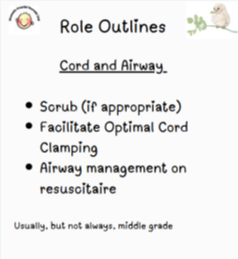
Figure 2
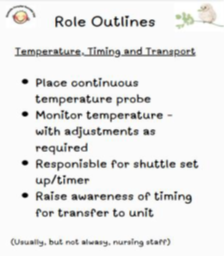
Figure 3
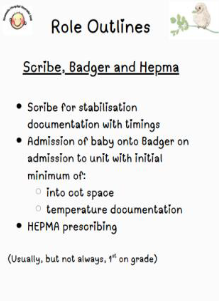
Figure 4
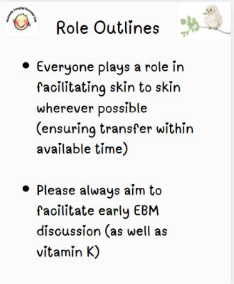
Figure 5
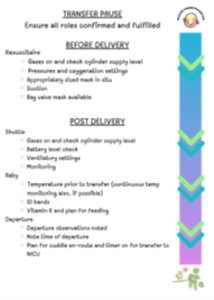
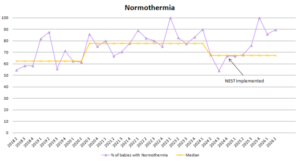
This project has been active for just over 10 months and we have seen sustained improvement in our temperature data over that time. It was reassuring to see that our overall thermoregulation remained good, but now we are able to demonstrate this within the allocated admission within 1 hour window. Our team are understandably proud of the achievement and actively seek to know how well we are doing, which encourages ongoing engagement.
Figure 6: Trends in normothermia compliance (Temperature within range within 1 hour of birth on admission to neonatal unit)
Our temperature data has improved, but our team has also made an excellent effort in embedding preterm perinatal wellbeing into our unit culture. We have established greater links with our maternity colleagues and parents are involved at every stage, ensuring a family integrated approach is not compromised.
By maintaining this approach, it will provide learning for resident paediatric doctors in neonatal training, to embed the evidence based approach to perinatal optimisation. It will ensure that as far as possible, babies have the best perinatal optimisation, without compromising the incredible opportunity for skin to skin/cuddles prior to transfer to neonatal unit and reflect the hard work and dedication of the whole team.
This approach will be part of our nursing and medical induction package, highlighting throughout the year, the importance of this. There will also be regular departmental and wider team updates on our progress and the benefits of perinatal optimisation for preterm infants.
Top Tips For Implementation
Initially engaging enthusiastic individuals to discuss the problem is useful, but quickly involving the wider team and making things interactive is helpful. We ran a bit of a competition, where people could nominate a name for the new team – which is where NEST came from. This also got people talking about it and opened up further positive conversation about the reasons for change.
This project could easily be transferred to other units and adapted to fit locally.
Acknowledgements
Thank you to our neonatal, obstetric and midwifery colleagues for engaging so well with the changes made.