
Perinatal optimisation bundle metric improvement in a District General Hospital
This 2026 quality improvement project aimed to was to improve compliance with perinatal optimisation measures for preterm infants
Authors
Devangi Thakkar, Consultant Paediatrician; Ruma Dutta, Consultant Obstetrician;
Shine Jacob, Preterm Optimisation Lead Nurse; Ammina Abdulkadir, Preterm Optimisation Lead Midwife; Tahira Noordin, Lead Data Support; Denise Ahmed, Preterm Optimisation Midwife. Hillingdon Hospital, The Hillingdon Hospitals NHS Foundation Trust.
Background
National Neonatal Audit Programme (NNAP) 2023 data found, only 68.6% of our preterm babies were receiving optimal cord clamping, and our normothermia achievement was 79%. Improvement projects showed individual improvement in these areas. In May 2023, only 5.7% of our babies were achieving the perinatal optimisation bundle metric (right place of birth, antenatal steroid administration, magnesium sulphate administration, optimal cord clamping, normal admission temperature, breast milk on day two of life) compared to 16.5% nationally. This put us in the bottom quartile nationally.
Key gaps identified included: variation in practice amongst staff, limited standardisation of processes and gaps in staff training and awareness.
Our aim was to improve compliance with perinatal optimisation measures for preterm infants, using a structured QI approach and MDT engagement, which we commenced in September 2023.
Stakeholders included: Neonatal consultants and nurses, obstetric consultants and midwives, practice educators, theatre staff, infant feeding team, data and governance teams and parents.
Measures
- Review of the NNAP Restricted Access Dashboard (RAD) and the BadgerNet dashboard in monthly audit meetings.
- Wider monthly preterm optimisation meetings to keep all stakeholders involved and engaged.
Results for the following measures:
- Right place of birth
- Antenatal steroids
- Antenatal magnesium sulphate
- Optimal cord clamping
- Normothermia
- Breast milk in the first six hours of life (by forty-eight hours)
Our improvement plan
- Standardisation of delivery room practices – We introduced our network preterm optimisation bundle in the delivery room, which included optimisation checklists (later these became electronic on each baby record on Cerner) and parent passports (including different languages using BAPM passports).
- Standardisation of delivery room practices – Using a preterm delivery checklist and same core teaching group for MDT study days and impromptu simulation sessions.
- Monthly audit and feedback loops – the core preterm optimisation team met monthly to look at every preterm mother/baby pair in the preceding month to draw out any learning.
- Embedding MDT communication and collaboration – In addition to monthly meetings of the core preterm optimisation team, we had a wider larger MDT meeting monthly too. This allowed other stakeholders to attend and kept involved, learn together and deep dive in various aspects of the care bundle to improve MDT working and learning. Dedicated stakeholders were identified as leads for various aspects of the optimisation bundle.
- Simulation-based MDT training including a session from our infant feeding team – The overwhelming feedback has been the enjoyable MDT aspect of this study day and learning from each other.
- Identification of key problem areas (e.g., antenatal steroids)
Outcomes
- Improved staff knowledge and confidence
- Stronger MDT culture and engagement
- Sustained improvement demonstrated through NNAP reporting.
Figure One: Perinatal optimisation improvement curve for Hillingdon Hospital Neonatal Unit between January 2023- December 2025
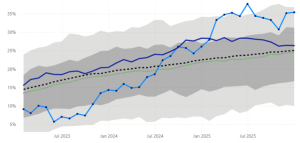
Two and half years into the project, following close audits and PDSA cycles, we were consistently achieving the optimisation bundle in 35% of cases, compared to the national and LNU average of 25%. We provided:
- More consistent, evidence-based care delivery
- Enhanced family-centred care
- Embedded MDT training programmes
- Ongoing audit structure
- Named leads and governance framework
- Integration into routine clinical practice
What is yet to be demonstrated is that long-term consistent approaches in care lead to improved outcomes for babies, improved family and staff experiences.
Challenges and learnings
- Workforce pressures (vacancies, rotating staff)
- Communication barriers
- Competing clinical priorities
- Learning: importance of culture change, leadership, and ongoing engagement
Top tips for implementation
- Prioritise MDT collaboration early
- Use data to drive engagement
- Invest in education and simulation
- Identify and support clinical champions
- Embed changes into daily workflow
Acknowledgements
The entire Neonatal and Maternity Service, and families at Hillingdon Hospital.